
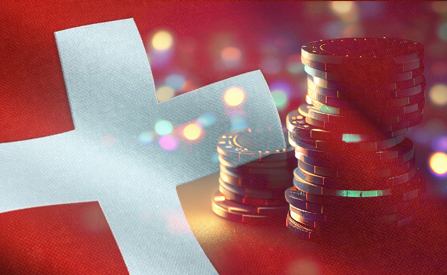
Welcome to our Switzerland no deposit bonus page for November 2026. Switzerland has a national licensing system for casino gaming. This page lists no deposit offers from casinos that say they accept players from Switzerland, so you can compare what each one asks in return. A no deposit bonus is a gift at sign-up: free spins or a small amount of bonus credit, with no payment up front. The list shows the wagering requirement and maximum cashout for each offer, so read both before you click.
Many people in Switzerland search for free spins with no deposit, free chips or a registration bonus so they can try a slot without risking their own money. Casinos can change the countries they accept, so confirm in the terms that Switzerland is still allowed.
Types of No Deposit Offers for Players in Switzerland
Nearly every no deposit offer falls into one of three formats. Our guide to the no deposit bonus opportunities available to new players gives the wider picture.
Free Spins
With no deposit free spins, the casino gives you a set number of spins on a chosen slot. What you win usually lands in a bonus balance, not as cash, so you must meet the wagering requirement before you can withdraw. Most of these offers are for online slots.
Free Chips and Free Play
A free chip is a fixed amount of bonus credit. It often works on more games than free spins do, but table games may count for little or nothing toward wagering.
Registration Bonuses and Codes
A registration bonus is credited when you create your account. Some offers need a bonus code, which appears next to the offer; our no deposit bonus codes page gathers them.
CHF and Currency: What to Check
The amounts in the list use a plain $ sign. They are not marked as Swiss francs (CHF). They are usually US dollars (USD) or euros (EUR), and a casino may credit your bonus in USD, EUR or another currency. Your wagering requirement and your maximum cashout are counted in that same currency, and a bonus is not converted into Swiss francs for you. The local currency is the Swiss franc (CHF).
Before you register, look in the terms and the cashier to see which currencies you can choose. Then think about your own account, which may be held in CHF, EUR or USD. If the two currencies differ, a conversion happens at the casino, at your bank or card provider, or both, and each step can add a fee or a weaker rate.
How to Claim a No Deposit Bonus
- Pick an offer on this page and read its full terms.
- Make sure Switzerland appears among the accepted countries.
- Register with your real name and details, exactly as on your ID.
- Enter the bonus code if the offer lists one.
- Check your balance, the expiry date and the list of excluded games.
If nothing is credited, contact support and mention the offer.
Wagering Requirements and Maximum Cashout
Two numbers decide most of an offer's value. The wagering requirement says how many times you must bet the bonus, or the winnings it produces, before you can withdraw. The maximum cashout is the ceiling on what you can take out of a no deposit win; anything above it is normally removed. Read why wagering requirements matter.
Illustrative example only: suppose a $10 free chip has 40x wagering. Then $10 × 40 = $400 must be bet in total. If the maximum cashout is $50 and your balance reaches $120, you can withdraw $50. This shows the arithmetic and is not the terms of any offer on this page. To test real figures, use our no deposit bonus calculator.
Payment Methods
Casinos choose their own payment lineup. You may find cards, e-wallets, crypto and bank transfer. Not every payment method is available for players in Switzerland, and some banks or card providers may decline gambling payments. A method that works for deposits may not work for withdrawals.
Withdrawing Your Winnings
You can withdraw only after the wagering is complete and your balance is within the maximum cashout. Expect an identity check, normally a photo of your ID and proof of address. Timing depends on the casino and the method. Our guide to withdrawing no deposit winnings covers the steps. Remember that any conversion from USD or EUR back to CHF may cost you something.
Playing from Switzerland: Practical Points
Switzerland has four national languages: German, French, Italian and Romansh. Which one you use depends on the region where you live, and casino sites in German, French or Italian are more likely than any in Romansh. Check the language of the terms yourself, since a translated page may not carry the same wording as the English one. Useful search phrases are Bonus ohne Einzahlung, bonus sans dépôt and bonus senza deposito.
- Currency: the Swiss franc (CHF) is the local currency, but many casinos list EUR or USD, and only some offer CHF. If your bank account is in CHF, expect a conversion and compare what your bank charges.
- Time zone: Switzerland follows Central European time (UTC+1, or UTC+2 in summer), so a deadline shown in UTC falls an hour or two later on a Swiss clock; check which time zone the terms use.
- Payments: cards, bank transfers and e-wallets are all in common use, but each casino has its own list and fees. Confirm that a method works for withdrawals as well as deposits.
Keep the same name and address on your account as on your ID, whichever language your documents use.
Online Gambling Rules in Switzerland
Switzerland has a national licensing system for gambling, with a federal authority overseeing it. Operators serving people in Switzerland are expected to hold a local licence, and unlicensed sites may be blocked.
The casinos on this page are offshore and may not be licensed in Switzerland. That means local protections, such as access to a local complaints route, may not apply if something goes wrong, and a site can be blocked at any time. Rules change and can be read in different ways, so check the current position before you play. This page is general information, not legal advice.
Play Responsibly
Treat gambling as entertainment, not as a source of income. Set a budget for time and spending, play only with money you can afford to lose, and never chase losses. Our responsible gambling resources are a good place to start if you need support.
You must be 18 or over, or the legal age where you live if that is higher, to use any offer on this page.